
Serial killers have been immortalized in dark popular culture in America. With the country’s fascination with true crime, it’s easy to believe that the U.S. has the highest number of the most well-known and deadliest serial killers. However, when looking at these monsters based on the total number of confirmed victims, big names like Jeffrey Dahmer, Ted Bundy, and John Wayne Gacy don’t even crack the top ten. As such, few people are aware of them, and they are rarely included in typical serial killer documentaries or podcasts. We’ve put together a list of the top five killers of all time, and it’s a grim roster of those whose crimes are too often ignored.
The worst serial killers of all time (surprisingly) aren’t from the United States
With how fascinated Americans are with serial killers, you’d think that the worst of the worst come from the United States. However, that country doesn’t even make the top ten. Chances are, you’ve never even heard the names of the most vicious serial killers of all time.
Of course, in composing this list, we had to have some rules.
We didn’t include:
- Mass murderers (people who kill a lot of people in a short amount of time),
- Combatants (including war criminals)
- Those who influenced homicides but didn’t commit them personally (so no Hitler, Stalin, Mao Zedong, Pol Pot, etc).
With that in mind, these are (at least by the numbers) the worst serial killers of all time:
Mikhail Popkov
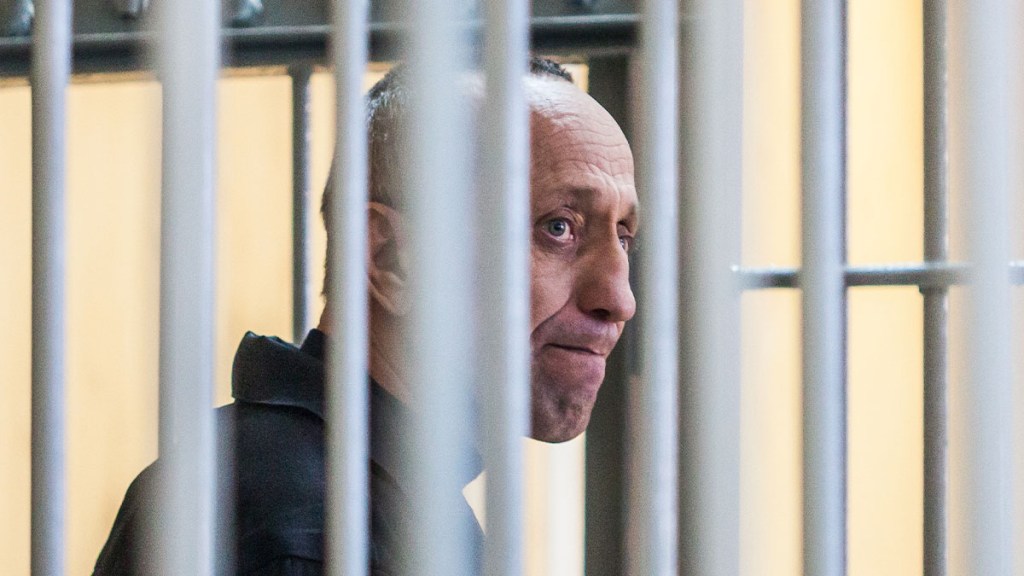
- Where: Russia
- When: 1992-2010
- Verified Victim Count: 83
- Possible Victim Count: 86+
Mikhail Viktorovich Popkov is the most prolific serial killer from Russia; he was born on March 7, 1964, in Norilsk, Russia, and grew up in Angarsk, Irkutsk Oblast, where he experienced a poor childhood with an alcohol-addicted mother who abused him. Popkov graduated from a technical school and then worked as a police officer in the Irkutsk area; later, he worked as a security guard at various regional companies. He also married and had a single child, a daughter.
Popkov murdered 83 women ranging in age from 16 to 50, mainly in Angarsk, Irkutsk, and Vladivostok. Popkov would lure women into cars while dressed in police uniforms and drive them to isolated spots to commit his crimes. The majority of Popkov’s victims were women he believed to be “immorally” engaged in public activity, such as being out with friends without male chaperones. Popkov committed many of these murders on Wednesdays because he wished to “purify” the world through violence against women. Popkov typically used everyday household items to kill his victims, including knives, axes, and hammers.
Popkov eluded law enforcement for nearly 20 years before being arrested in 2012 after forensic experts compared over 3,500 police officers’ DNA samples. Popkov cooperated with law enforcement and directed investigators to the site where they found the bodies of many of his victims. He was sentenced to life in prison in 2015 for committing 22 murders and attempting 2 more. Subsequent confessions resulted in a second life sentence for 56 additional murders. During his sentence, Popkov was tried for further killings and received an additional 6 life sentences in 2021 and 2023.
Popkov currently resides in a Russian maximum-security prison and claims remorse for his crimes. He has expressed a desire for the death penalty, but Russia has been under a de facto moratorium on capital punishment since 1999.
Javed Iqbal
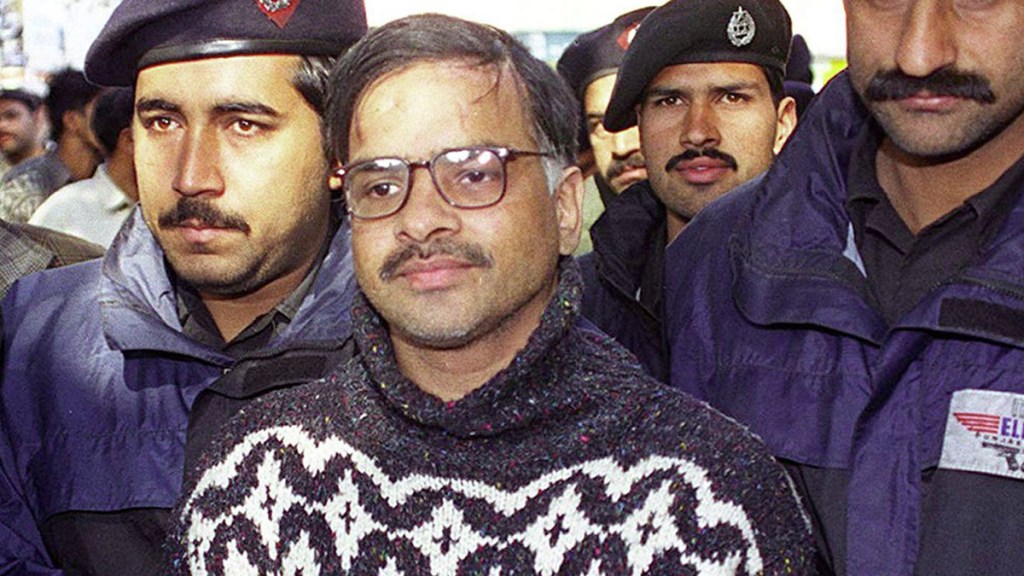
Where: Pakistan
When: 1998-1999
Verified Victim Count: 100
Javed Iqbal Mughal is considered the worst serial child killer in history, having sexually abused and murdered over 100 children, aged 6-16 years old, in Lahore during 1998-1999. Most of the children murdered were homeless, runaways, or beggars.
At the end of 1999, Iqbal sent letters to the police and a local newspaper editor admitting to committing the murders, and included in the letters were packages containing evidence of the crimes. He gave a detailed confession, describing how he lured these children to his house, where he would sexually assault them and strangle them with an iron chain. After strangling the children, Iqbal would cut up their body parts, dissolve them in large vats of hydrochloric acid, and dump the acid remnants down the sewers or the Ravi River for disposal purposes. Iqbal maintained extremely accurate documentation of all of the murders, including victim names, victim ages, victim photographs, and the specific clothing worn by each victim.
Iqbal stated that his actions were a form of revenge for the physical beating he suffered while being arrested by police in the early 1990s, and that this beating caused his mother’s death due to a heart attack. In fear of extrajudicial punishment, Iqbal turned himself in to the authorities at the offices of a major newspaper on December 30, 1999.
In March 2000, Iqbal was found guilty and received 100 death sentences. The judge unusually sentenced Iqbal to hanging using the same chain, after which his body would be cut up, and dissolved with acid in front of the victim’s family members. The Interior Minister blocked this method of execution as it was considered to be cruel and unusual.
On October 8, 2001, Iqbal apparently took his own life by hanging, along with his accomplice Sajid, inside the walls of the Kot Lakhpat jail. Autopsy results indicated that both men had been physically abused during their incarceration.
Pedro Lopez
- Where: Columbia, Ecuador, Peru
- When: 1969-1980
- Verified Victim Count: 110
- Possible Victim Count: 300+
Pedro Alonso Lopez, commonly known as the “Andean Monster” and born on October 8, 1948, is among the world’s worst serial killers. The child of an extremely impoverished household of 13 siblings, Lopez experienced a challenging and unstable childhood. His early years were also marked by difficulty with the law.
Following a conviction for automobile theft in Colombia, Lopez was incarcerated for several years, where he participated in several violent incidents. Upon his release in the late 1970s, Lopez began a crime spree that spanned multiple countries, including Colombia, Ecuador, and Peru. His target was largely poor, young girls who were often either homeless or members of indigenous communities. Lopez admitted to having sexually abused and murdered over 300 victims between the late 1970s and 1980. Officials confirmed a minimum of 110 murders via his own admission and the location of human remains.
Arrested in Ecuador in March of 1980 after attempting to abduct a victim, Lopez assisted the police in locating several of the graves of his victims. Lopez was found guilty of murder and sentenced to 16 years, the maximum allowed under Ecuadorian law at the time, and was released early in 1994 for good behavior. Lopez was deported back to Colombia and subsequently evaluated psychiatrically. Lopez was initially committed for psychiatric treatment but was later released in 1998 when deemed mentally fit.
The last confirmed sighting of Lopez was in September 1999 in Bogota, where he renewed his identification documents. Although there have been some unconfirmed reports and speculation surrounding Lopez, including a possible connection to a 2012 Colombian case, Lopez’s current whereabouts are unknown. He’s now in his late 70’s and is still considered a fugitive by authorities.
Mariam Soulakiotis

- Where: Greece
- When: 1939 to 1951
- Verified Victim Count: 177
- Possible Victim Count: 500+
Unlike most serial killers, Abbess Mariam Soulakiotis’s motivation was primarily monetary in nature. She became a Greek Orthodox nun and founded the Pangia Pefkovounogiatrissa Monastery in 1927. The convent was opened to provide a retreat for those with tuberculosis to be treated, and she became an abbess in 1950. She used this position to lure in potentially hundreds of victims.
Many of Soulakiotis’s victims were wealthy women she convinced to join the convent (mainly spinsters and widows). Once there, she would torture, starve, imprison, and beat the women until they agreed to turn over their fortunes to the monastery. She would then embezzle the money and often would kill the victim to cover her tracks. The only time doctors came to the convent was to sign death certificates, so she could blame the deaths on TB (or whatever she wanted).
Eventually, authorities raided the monastery on suspicion of black-market olive oil and tire smuggling. Once there, they found malnourished women tied up in basements and forcibly removed 36 children found on the premises. They arrested Soulakiotis, and evidence and witness statements against her started pouring out. At this point, she had acquired 300 properties across Greece and thousands of pounds of gold, jewels, and cash.
Eventually, she was accused of 27 murders and 150 negligent homicides of TB patients. However, authorities stated that the number could be closer to 500. Soulakiotis denied all charges and was sentenced to a total of 14 years in prison over the course of three trials. She only served a fraction of it before dying at age 71.
Despite all the evidence against her, Soulakiotis claimed innocence until her death, deriding the charges as “satanic fiction.” Surprisingly, some still proclaim that Soulakiotis was innocent and that she took the fall for crimes committed by others, and a select few even venerate her as a martyr.
Luis Garavito
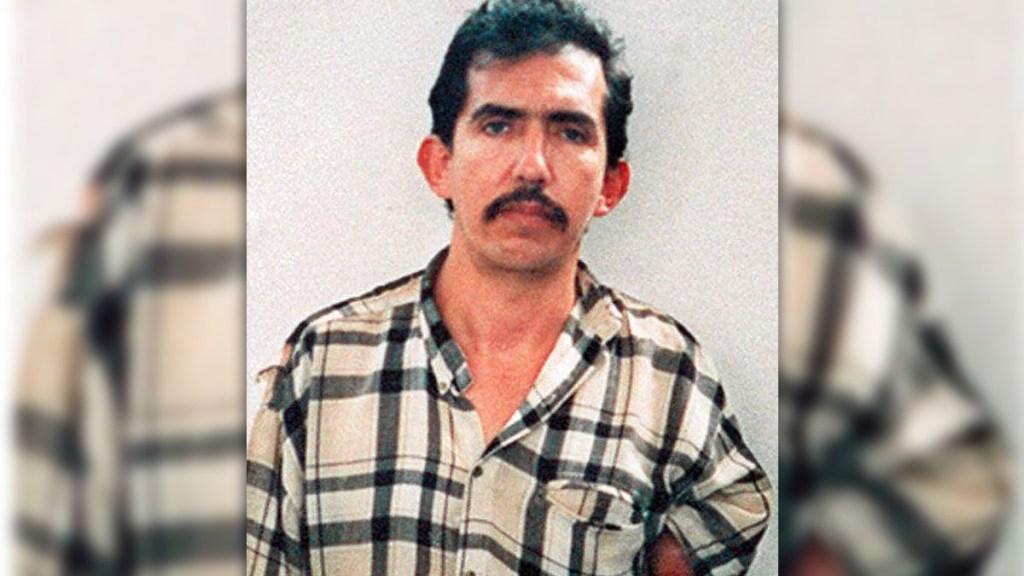
Where: Colombia, Ecuador, and Venezuela
When: 1992 to 1999
Verified Victim Count: 193
Possible Victim Count: 194-300+
The most prolific serial killer when it comes to the number of verified victims is Luis Garavito, aka “La Bestia” (The Beast) and “Tribilín” (Goofy). Garavito experienced a traumatic childhood, which included physical, emotional, and sexual abuse. As he entered his teens, he displayed patterns of behavior common among serial killers, including animal cruelty, molestation, and physical violence against younger children.
Despite receiving psychiatric treatment in early adulthood, Garavito continued to struggle with alcoholism, psychosis, depression, and other issues. Between 1992 and 1999, he went on a spree during which he sexually assaulted over 200 minors and murdered a verified 193 victims (though the unverified total could have been 300+). Most of his victims were boys aged 6 to 16 from impoverished backgrounds.
Garavito’s MO was to disguise himself as a trustworthy figure, such as a monk, priest, teacher, or elderly man, and lure them in with promises of jobs, money, candy, or alcohol. He would then lead them to a secluded area where he would bind, torture, rape, and kill them.
After seven years, Garavito’s spree came to an end in 1999 when he was arrested for the attempted rape of a Colombian boy. After spending several months in custody, he confessed to his crimes and aided police in finding the bodies. He would later receive 1,853 years in prison, but Colombian law caps sentences to 40 years. Surprisingly, this was reduced to 22 years for cooperating with the police.
When interviewed, Garavito expressed remorse for his crimes and blamed his abusive childhood for his actions. He described plans to potentially become a pastor or run for office. However, he would never leave prison. He died in 2023 at age 66 from a combination of heart attack, tuberculosis, leukemia, and eye cancer.