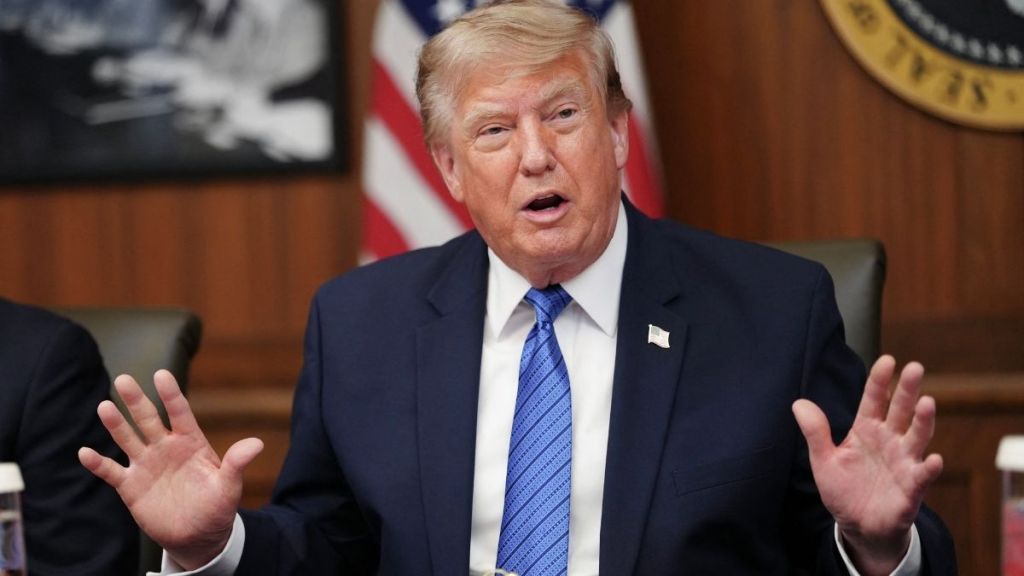
A coalition of 25 states sued Donald Trump’s administration on Monday. The legal action challenges a new round of import charges the states describe as an illegal end-run around a Supreme Court defeat. The news comes amid rising prices because of the ongoing Iran war.
Donald Trump administration sued over global tariffs
The coalition of the 25 states wants the US Court of International Trade to block the new duties, rule them unlawful, and force the government to refund money already collected. The charges, set at 10% to 12.5%, hit goods from 59 countries and the European Union. Together, those trading partners supply 99.4% of all US imports.
The dispute traces back to February, when the Supreme Court struck down earlier tariffs imposed under the International Emergency Economic Powers Act. That ruling forced Donald Trump’s administration to reimburse importers. Officials then rolled out temporary worldwide tariffs, which expired at midnight on July 24. The new charges replaced them immediately.
The administration now anchors its authority in Section 301 of the Trade Act of 1974. Officials claim the targeted nations have failed to curb imports produced with forced labour. The states flatly reject that justification. New York Attorney General Letitia James condemned the move.
“After losing at the Supreme Court, the administration is once again trying to illegally raise taxes on families and businesses with a new round of tariffs,” James said in a statement. “No matter how the administration tries to justify it, the law and our Constitution are clear that the president does not have the power to impose sweeping tariffs on whatever countries he wants.”
The White House pushed back. Spokesman Kush Desai said the US is using lawful authority to eliminate unreasonable practices that burden American commerce. “A foreign country’s failure to impose and effectively enforce a prohibition on the importation of goods produced with forced labor is unreasonable and burdens US commerce, including American workers, and must be addressed,” Desai stated. He insisted Section 301 tariffs remain a “legally durable tool” (via The Guardian).
The states include New York, Arizona, California, Colorado, Connecticut, Delaware, Hawaii, Illinois, Kentucky, and Massachusetts. Additionally, Maryland, Maine, Michigan, Minnesota, Nevada, New Jersey, New Mexico, North Carolina, and Oregon join them. Pennsylvania, Rhode Island, Virginia, Vermont, Washington, and Wisconsin are also part of the list.