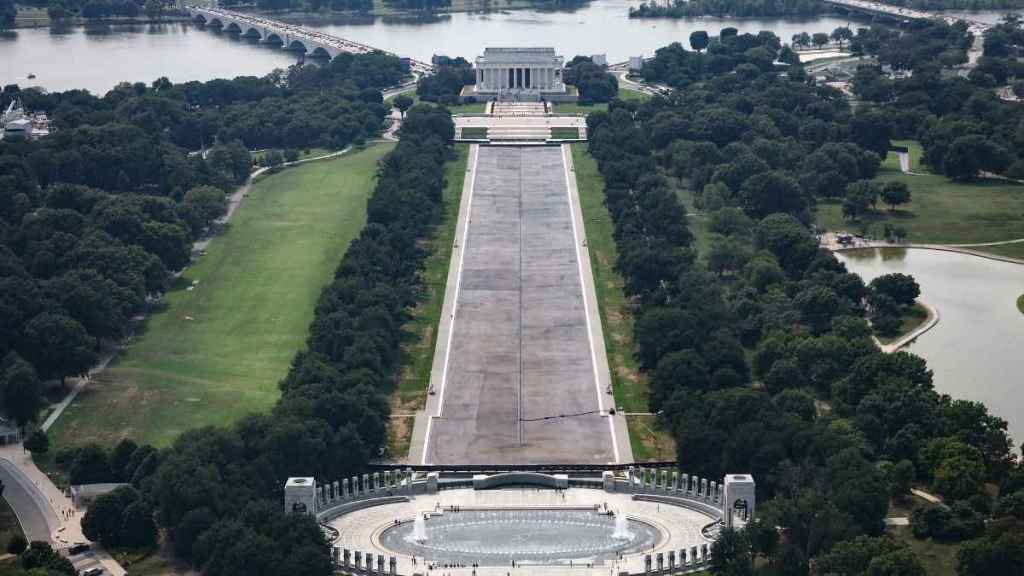
Questions are mounting over what caused damage to the Lincoln Memorial’s Reflecting Pool. New expert reviews point toward installation issues instead of deliberate vandalism. The disagreement comes as the Donald Trump administration continues to blame vandals for the damage. But after studying construction records, photos, videos and satellite imagery, multiple waterproofing specialists say the visible evidence appears to tell a different story.
Experts reviewed photos, videos, and satellite imagery from the Reflecting Pool project
According to the Washington Post, rather than appearing at random, every visible section of peeling identified in the analysis was found where separate layers of coating met. As per the experts, who examined the available imagery, the pattern is difficult to ignore. While they stressed that only on-site testing could determine an exact cause, they agreed the failures looked more consistent with application problems than intentional damage.
Their conclusions centered on how the waterproof lining was installed. The Reflecting Pool was coated in stages using Rhino 406 epoxy primer followed by Pipeliner 5000, a sprayed waterproof membrane. Specialists noted that these materials require strict timing and careful surface preparation between applications. Waterproofing expert Vito Mariano said the goal is to keep the coating “as monolithic as possible.” He explains that every stop-and-start creates another opportunity for failure.
The White House, however, continues to reject that explanation. President Trump has repeatedly blamed vandals. He claims “thugs” cut and pulled up more than 300 yards of the pool lining. Interior Secretary Doug Burgum has said the damage resulted from people attempting to destroy part of the national monument.
After reviewing the findings, White House spokeswoman Taylor Rogers insisted there were “no missteps” during construction and maintained that vandals caused the damage. Officials did not provide evidence supporting those claims.
The timing has only added more fuel to the conversation. The $14 million restoration wrapped up just a few weeks ago, making the latest issues even harder to ignore. Atlantic Industrial Coatings, which landed the project through a no-bid contract, has downplayed the damage, saying the affected spots were limited and didn’t point to a failed liner.