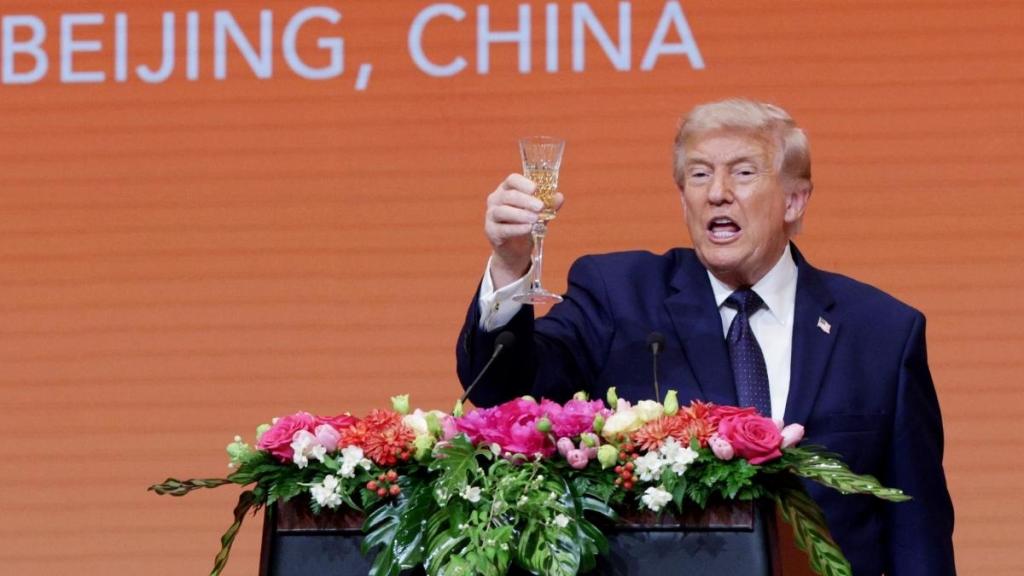
President Donald Trump‘s administration is tightening visa rules for foreign journalists, singling out Chinese journalists. The move is reportedly deemed to reignite a tit-for-tat media conflict between Washington, D.C., and Beijing.
Donald Trump’s DHS rule singles out Chinese journalists for the shortest U.S. stay limit
Under new regulations published Friday by the Department of Homeland Security (DHS), U.S. visas for international journalists will be capped at 240 days. Mainland Chinese journalists face an even tighter restriction with just 90 days before they must apply for an extension.
The 90-day limit revives a policy that Donald Trump pushed during his first term, which former President Joe Biden later scrapped. DHS officials argued the shortened timeframe lets authorities more closely monitor visa holders. Moreover, it lets them verify that the visa holders’ activities match the purpose of their entry. Extensions will remain available, the agency noted.
The same rule package ends a longstanding policy for international students, imposing a four-year cap on student visa holders. Previously, foreign students and exchange visitors could stay in the country as long as their academic programmes lasted.
These changes land during a fragile trade truce between Washington, D.C., and Beijing. Both governments are eyeing a September leaders’ meeting to advance talks on trade and investment. Yet, the visa restrictions threaten to sour that atmosphere. When the rules were first proposed last year, China urged the U.S. to avoid triggering fresh “media warfare” and signaled it would retaliate (via Bloomberg).
The tit-for-tat history is reportedly well established. During his first term, Trump ordered Chinese state-owned news outlets to slash their U.S.-based staff after Beijing imposed restrictions on American journalists. U.S. officials have consistently argued that far more Chinese reporters operate in America than the other way around.
Tensions escalated further on Thursday when Trump used a primetime address to accuse Beijing of attempting to influence American public opinion. He claimed the Chinese government tried to pay U.S. journalists to publish negative stories about his administration. The president further alleged it was part of a broader campaign to damage his political standing and sway future elections.
He reportedly stopped short of offering specific evidence. As such, he named no journalists or media outlets, and disclosed no dates, financial records, or declassified documents to support the allegations.