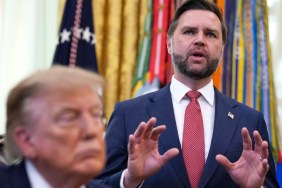
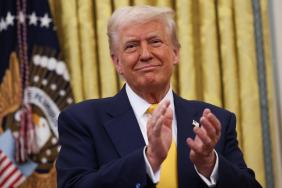
President Donald Trump told reporters at the White House on Wednesday that Washington handed Moscow no concessions to free American prisoner Stephen Hubbard. Within moments, he undercut his own claim by pointing to a diesel deal and sanctions relief he had approved with Russia. This suggests that those helped bring Hubbard home.
How Stephen Hubbard’s release figured in Trump’s Russia decisions
Donald Trump opened with a boast during a roundtable session. “So we appreciate the fact that we were able to get him. We gave nothing in exchange, which is very rare. We never give anything in exchange,” he said. The follow-up told a different story.
The president referenced the bipartisan backlash he took earlier this month for signing a diesel agreement with Russia and lifting America’s economic sanctions on the country. “I was in the midst of getting Stephen out of Russia and, if we did what these foolish people wanted me to do, he wouldn’t be coming out right now. He’d be in there for another 20 years,” Trump said. “So the last thing I was going to do was break up that.”
That sequence — a flat denial followed by an admission — invited scrutiny of exactly what the U.S. put on the table in its dealings with Russia. For those unaware, Hubbard, a retired teacher from Michigan, spent years living in Ukraine before Russian forces seized him during the war’s opening weeks. A Russian court convicted the 74-year-old of mercenary activity in 2024. He walked free early Wednesday after nearly five years in custody.
All in all, Trump sidestepped the criticism, telling reporters he didn’t want to “upset an apple cart where we’re getting close to settling a war.” The episode leaves the president’s Russia posture and the true price of Hubbard’s freedom an open question for many.