The Arabic term “habibi” has surged in search interest after Michigan Senator-elect Abdul El-Sayed used it to address Vice President JD Vance during his midterm victory speech. This sparked widespread curiosity among netizens about its meaning and the political context behind the remark.
Abdul El-Sayed calls JD Vance ‘habibi’ while giving midterm speech
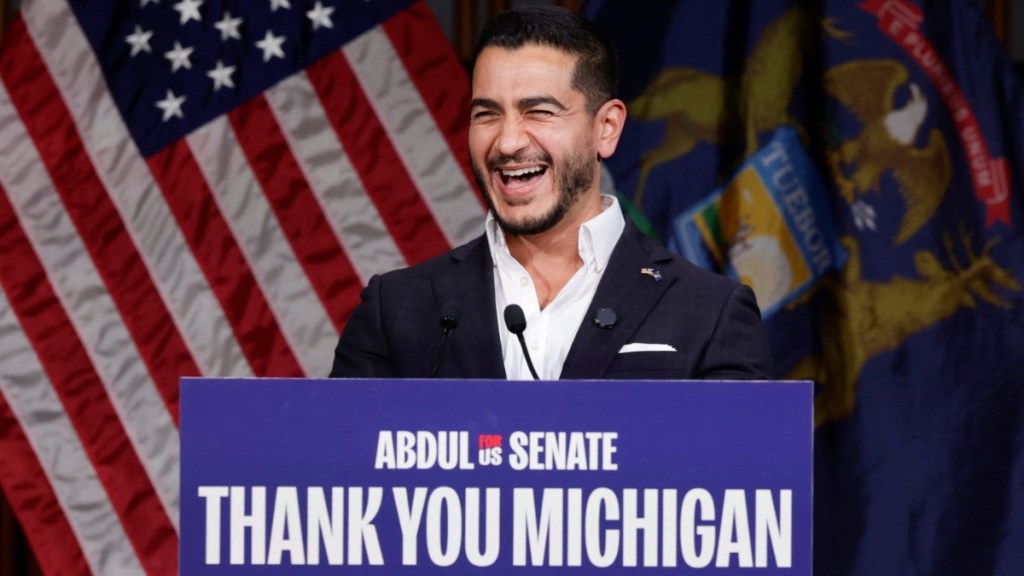
Abdul El-Sayed, now the elected Michigan Senator, used the Arabic word “habibi” while addressing Vice President JD Vance during his victory speech in Detroit on November 3. He defeated Republican candidate Mike Rogers in the state’s Senate election.
“Habibi” is an Arabic term of endearment that literally translates to “my love.” Depending on the context, it can also mean “my dear,” “my darling,” “beloved,” or “sweetheart.” It is commonly used when addressing friends, family members, and romantic partners. The word originates from the Arabic root “hubb,” which means love.
On Wednesday, turning towards Vance, El-Sayed highlighted the irony of the vice president having to administer his oath of office in January 2027. “JD, habibi, there is this delicious irony in the fact that you’re constitutionally obligated to swear me in January,” El-Sayed said.
The remark drew loud cheers from supporters attending the victory rally. He took another dig at Vance, referring to the sporting rivalry between the University of Michigan Wolverines and Ohio State University’s Buckeyes. Vance graduated from Ohio State, while El-Sayed attended the University of Michigan. “So you know what that means? Wolverine 1, Buckeye 0,” he said.
The Senator-elect also gave a special mention to President Donald Trump, who was continuously seen struggling with pronouncing El-Sayed’s name. “Donald, look, I know you struggle with my name. So after JD swears me in January, you can just go on and call me Senator,” he said.
The use of the Arabic word “habibi” seems like a sarcastic response to the hostility El-Sayed faced from Republican leaders during the election campaign. Vance had criticized him publicly, while Trump repeatedly targeted his name, his Muslim identity, and political positions. By addressing Vance with an affectionate Arabic expression, El-Sayed turned the language associated with his Egyptian heritage into a political joke.