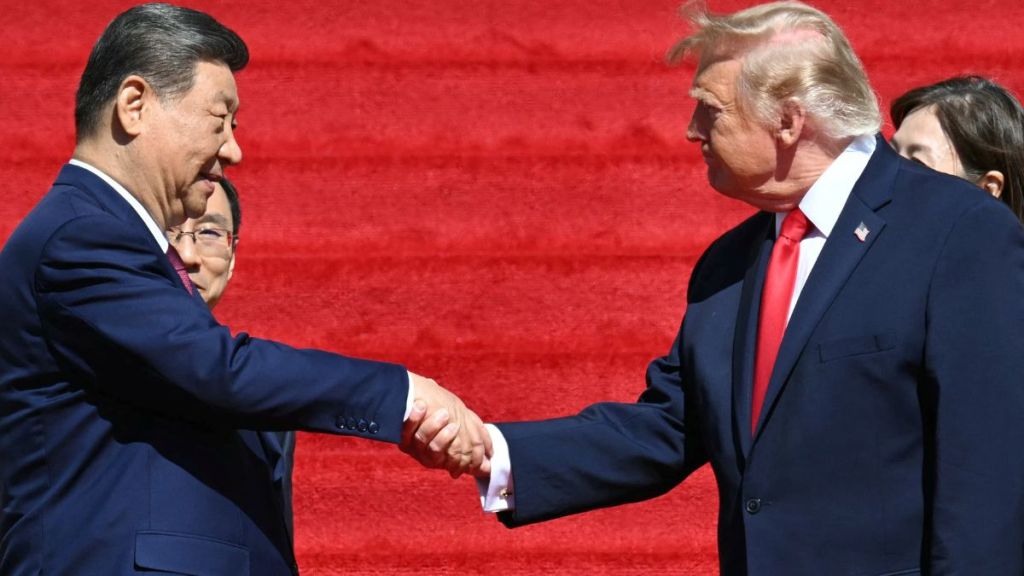
President Donald Trump on Monday rejected a claim that he asked Xi Jinping whether China wanted to buy American weapons. Moments later, he said such a sale might be worth considering. His answer left him at odds with his own ambassador in Beijing and highlighted the mixed messaging that has been seen in his policy towards China.
Donald Trump says no arms sale to China was discussed with Xi Jinping
Reporters asked the president about comments by David Perdue, the U.S. ambassador to China, who said over the weekend that Trump had put the question to Xi directly. Trump looked puzzled and wondered aloud whether Perdue had meant Taiwan instead. He said he had not heard the story and would ask the ambassador about it.
Then he turned reflective. Chinese officials would likely want U.S. equipment, Trump said, because it outperforms rivals’ gear. “Maybe it’s a good idea,” he said, before insisting that “we didn’t discuss it.” However, Perdue made his claim in an interview on Fox News Channel, days after Xi’s state visit to Washington. He said Trump treats Taiwan arms deals as one part of America’s broader weapons trade, and that the president once asked Xi if he wanted to buy some. Perdue gave no date for the exchange.
According to AP News, the State Department said Monday that U.S. law prohibits arms sales to China and that there is no offer or plan to sell weapons to Beijing. Evan Sankey, an analyst at the Cato Institute, said the U.S. last sold weapons to Beijing in the 1980s and called a resumption “a shocking policy change.” Craig Singleton of the Foundation for Defense of Democracies said Perdue’s account offered a “revealing window” into what he described as Trump’s transactional approach to weapons, tariffs and market access. Any potential sale would also raise questions about U.S. obligations to help Taiwan maintain its defense capabilities.
China’s foreign ministry spokesperson, Guo Jiakun, did not confirm Perdue’s account when asked on Monday. He said Beijing builds up its defenses according to its own needs and supports global peace and stability.