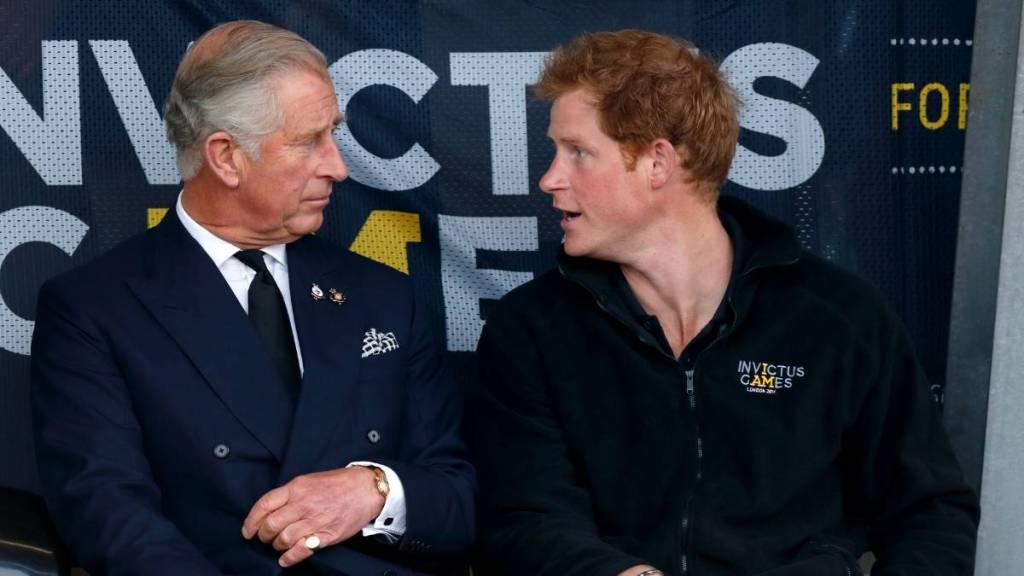
Prince Harry reportedly appears to be placing the blame on King Charles over Uganda’s decision to withdraw from the Invictus Games. The move comes shortly after Buckingham Palace clarified the Sussexes’ royal working status in a letter that was made public.
Following its release, Uganda’s General Muhoozi Kainerugaba took to social media to announce that the country would not participate in the Invictus Games while reaffirming its support for the monarch.
Sources say Prince Harry blames King Charles for Uganda exiting Invictus Games
A source close to Prince Harry suggested that the Lord Chamberlain, the most senior courtier in the Royal Household, taking a stance on the Sussexes’ ties to the royal family may have contributed to Uganda’s decision to withdraw from the Invictus Games.
Speaking to The Telegraph, the source said, “Intended or unintended, this is clearly a consequence of the Lord Chamberlain’s guidance regarding the Duke and Duchess of Sussex, that was rushed out without consultation on Monday.”
The following day, Kainerugaba announced Uganda’s decision regarding its participation in the Invictus Games on X. “In order not to be construed as being opposed to His Majesty King Charles III of the United Kingdom, whom we deeply revere, Uganda hereby withdraws from the Invictus Games,” he added.
He also said that Uganda would not participate in any event that does not have the monarch’s approval. Prior to this, a source told the Associated Press that the Sussexes were not given sufficient time to thoroughly review the letter before it was made public.
According to the source, they received the letter just over an hour before it was released to the media. The letter clarified that the Sussexes remain private individuals and that their charitable work is personal and not associated with the royal family.
“Their styles as His and Her Royal Highness remain in abeyance and are not used. The charitable work of the Duke and Duchess is a personal matter for them both and undertaken in their private capacity. In short, their position is akin to private citizens with commercial and charitable interests,” the letter read.