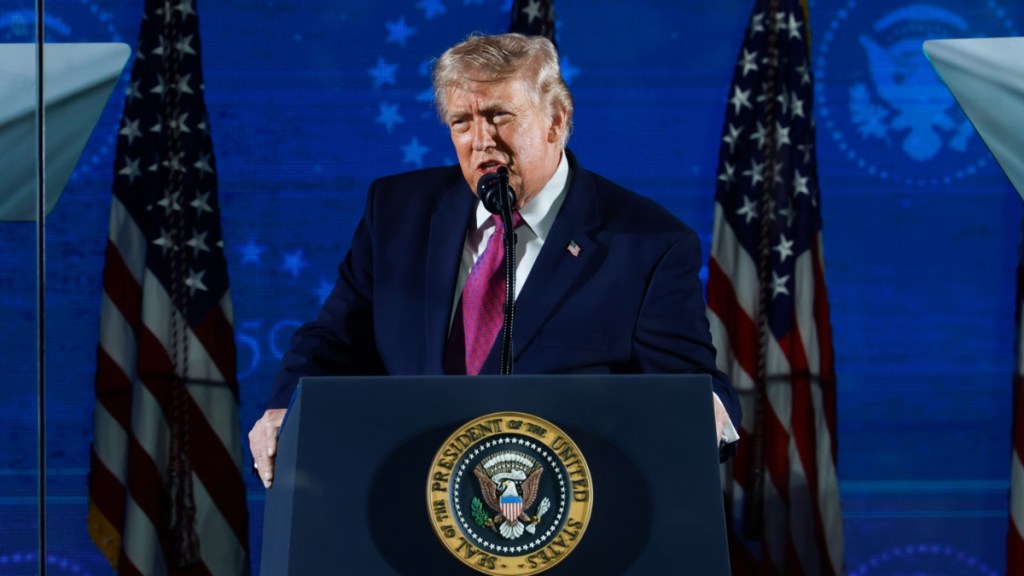
Donald Trump used America’s birthday to air some very personal grievances on the National Mall. The president’s Fourth of July speech shifted from celebrating the Constitution to referencing his legal battles and felony conviction.
Donald Trump complained about his treatment during the speech
During his Fourth of July speech on the National Mall, President Donald Trump claimed he “wasn’t treated that well.” He made the remark while discussing the Constitution and the American right to equal justice under the law. “Unlike so many others in the world, in this country we have freedom of speech, freedom of religion, equal justice under the law,” he said, according to The Hill. “Although I wasn’t treated that well, but we won’t get into that.”
The comments referenced his ongoing legal battles and felony conviction from the New York hush money case. A jury found Trump guilty on all 34 counts of falsifying business records to conceal payments to adult film actress Stormy Daniels. He became the first president to hold office as a convicted felon. A judge also found his business empire inflated its net worth for better tax and insurance benefits. The court initially ordered a $500 million penalty, though an appeals court later tossed the fine while upholding the judgment.
Trump is currently appealing his conviction and has maintained his innocence throughout the process. Last month on Truth Social, he wrote that he was “an innocent man who has been horribly treated.” He also demanded that prosecutors behind the case face criminal repercussions.
The president also indirectly referenced his unfounded claims that the 2020 presidential election was stolen. He suggested he was really serving his “third term” rather than his second. “We rebuilt our military in my first term,” he said. “Actually, I should say third term, but I won’t do that, because I don’t want any controversy.”
The speech largely resembled a State of the Union address, promoting legislative priorities like the SAVE America Act. He also criticized recent victories by democratic socialist candidates, comparing their politics to a “cancer.”