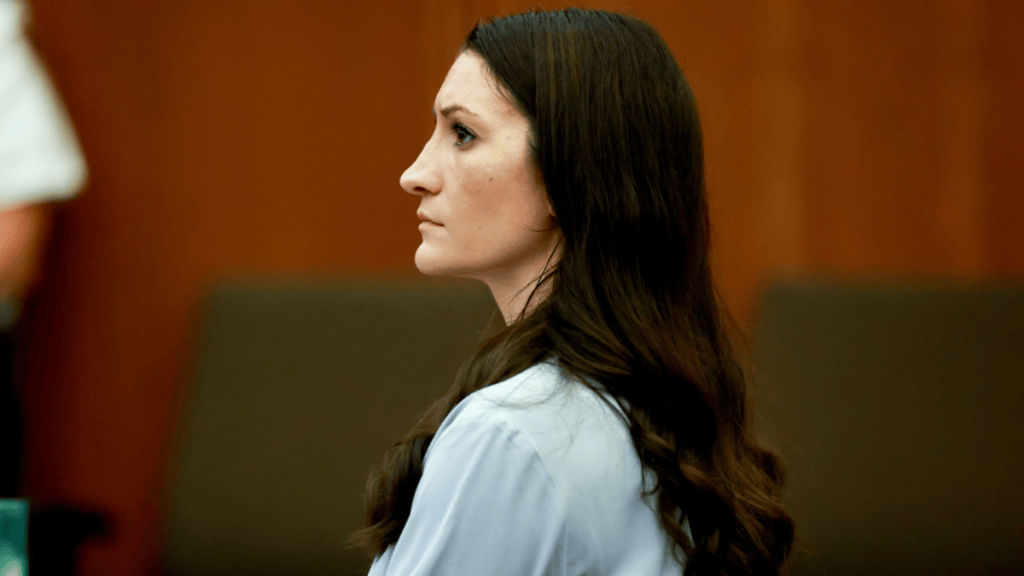
Lindsay Clancy’s murder trial ended in a mistrial, and three jurors have now offered an explanation for why they could not reach a verdict.
One man stood apart during deliberations over Clancy’s criminal responsibility. The jurors said the panel had moved toward a finding of not guilty by reason of insanity before the holdout refused to budge.
Lindsay Clancy jurors say the lone holdout acknowledged reasonable doubt but still refused to join the other 11 jurors
Reuters reported that three female jurors spoke publicly in an NBC10 interview. Foreperson Roni Carlson said the unnamed man acknowledged reasonable doubt, then rejected that outcome. “He admitted he had reasonable doubt and I started filling out the forms, I was so excited,” Carlson said. She recalled him saying, “I’m still not going to say that she’s not guilty by reason of insanity.”
Juror Paula Devlin was blunter about the holdout juror. She called him “very arrogant” and said, “He really did not take anything that anybody said.” The juror could not be reached for comment, and the jurors’ names remained sealed. Judge William Sullivan declared a mistrial on Friday after all 12 jurors failed to agree. The case involved Clancy’s three children in Duxbury.
Clancy, 36, admitted strangling Cora, 5, Dawson, 3, and Callan, 8 months, using exercise bands. She then cut herself and jumped from a second-story window. The fall left her paralyzed.
During the six-week trial, defense attorney Kevin Reddington argued that a psychotic episode prevented her from understanding right and wrong. He cited her journals and her mother-in-law’s testimony. Carlson said jurors accepted that Clancy killed the children. “She did,” Carlson said. “And she’s admitting that.”
Jurors had to determine whether Clancy understood right from wrong. Carlson said evidence of her love for the children suggested “she had to have snapped.” Juror Kellie Farina also questioned the prosecution’s approach. “I just found it to be harsh,” she said. “Very, very harsh.”
A finding of not guilty by reason of insanity would have meant psychiatric hospitalization and regular court review. A first-degree murder conviction could bring life without parole. Prosecutors had not said whether they would seek a retrial. Clancy remained at a state hospital.