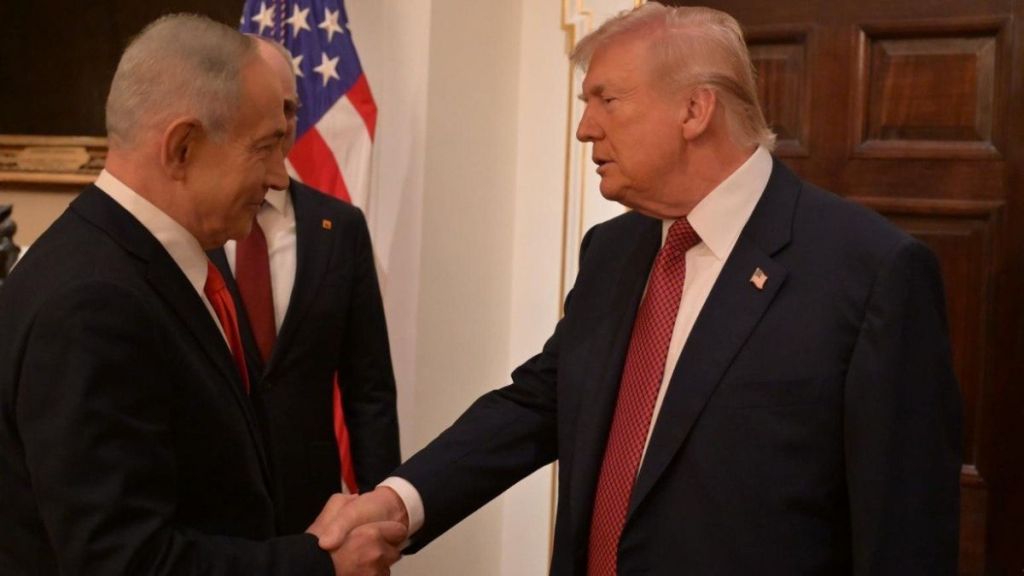
Another White House meeting will put Donald Trump and Benjamin Netanyahu together. The talks come as fighting with Iran continues, without a clear end in sight. Both leaders are expected to tackle several major security and diplomatic issues. But the conflict in Iran is set to dominate the agenda during the high-profile meeting in Washington.
Netanyahu to visit Donald Trump amid Iran war
US President Donald Trump is scheduled to host Israeli Prime Minister Benjamin Netanyahu at the White House on Tuesday. The meeting is expected to be a pivotal discussion on the Middle East. According to a White House official, the leaders will focus on the ongoing Iran conflict, efforts to advance a peace framework in Lebanon, and expanding the Abraham Accords. Trump is also set to meet Ukrainian President Volodymyr Zelenskyy later the same day to discuss the war in Ukraine via NBC News).
The meeting arrives at a delicate political moment for Netanyahu. Back home, public backing for the Iran war has weakened. Meanwhile, support for his government’s broader military actions has also slipped in the United States. Relations between Trump and Netanyahu have also been strained recently. When asked about Netanyahu’s criticism of U.S. plans to sell F-35 fighter jets to Turkey, Trump replied, “Nobody tells me what we should be selling and not.” Still, he described their positions on Iran as having “a little difference, but pretty close.”
Speaking before an Israeli Cabinet meeting, Netanyahu said he expected the pair to review the state of the Iran conflict. Their meeting follows reports of a phone call between the two leaders last month, later acknowledged by Trump, who told The New York Post that he had been frustrated by Israel’s continued fighting with Lebanon. Netanyahu, however, downplayed any rift, describing the disagreements as tactical and saying the two leaders consistently find common ground as “great friends.”
The talks also unfold amid growing questions over the war’s direction. U.S. lawmakers have scrutinized the administration’s handling of the conflict following Operation Epic Fury. Meanwhile, recent American military casualties have increased pressure on Washington.