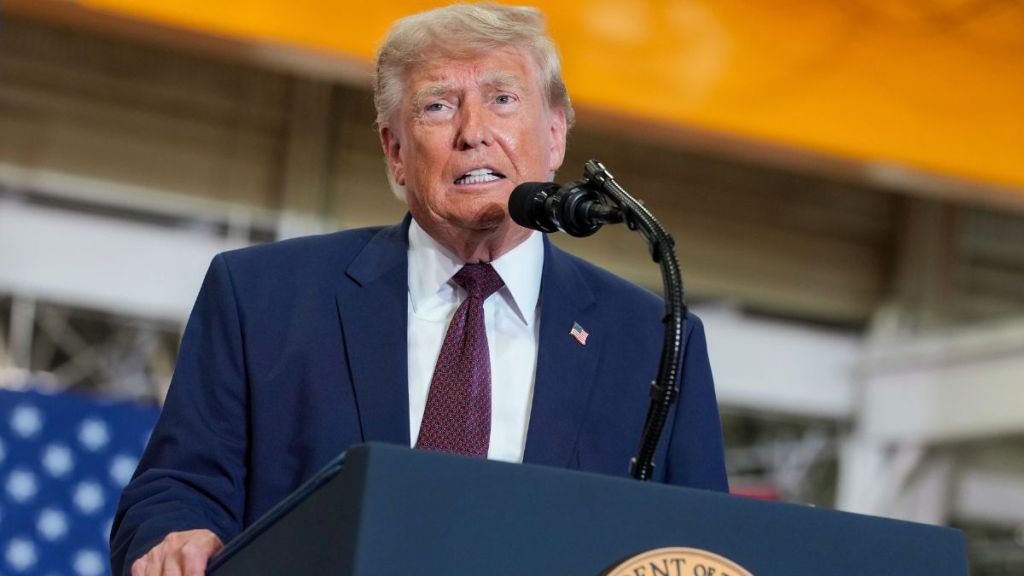
President Donald Trump placed falling oil prices at the heart of his midterm pitch during a campaign stop in Pennsylvania’s Lehigh Valley. Addressing workers at a Mack Trucks facility, the president argued that his economic policies have started to ease the cost-of-living pressures that dominate voter concerns.
Donald Trump talks about economy and oil prices in new speech
Donald Trump framed the recent drop in oil prices as a direct result of his administration’s actions, telling the crowd that energy costs would keep falling and pull other prices down with them. “That oil is going to come charging down. And with oil comes everything else,” he said (via NBC News).
The visit targeted a swing district that both parties view as essential for control of Congress. Trump rattled off job creation numbers, pointing to 32,000 new positions he said his policies had delivered across Pennsylvania. He highlighted pharmaceutical plants, medical device factories, and new auto facilities under construction in the region. His tax cuts and efforts to lower prescription drug prices featured heavily, with Trump claiming either achievement “alone should win us the midterms.”
Trump also used the speech to defend his tariff strategy. “I placed 50% tariffs on foreign copper, aluminium and steel, so they couldn’t come in and steal your job, and sometimes even more than 100% tariffs,” Trump told supporters. He argued the levies had stopped what he called “trade cheaters” from undermining American manufacturing.
U.S. crude closed at $73.21 a barrel on Tuesday, sitting just $6.19 above its level before the military strike on Iran. That narrow gap allowed Trump to claim his approach to Tehran was stabilizing markets even as diplomacy continues. But the numbers tell a more complicated story.
Brent crude traded at $78.04 per barrel by early June 23, down about $1.21 from the previous morning yet roughly $7 higher than where it stood a year ago. While prices have plunged nearly 26% from the $105.03 level seen a month ago, the year-on-year increase of almost 10% leaves households still feeling the squeeze (via Fortune).