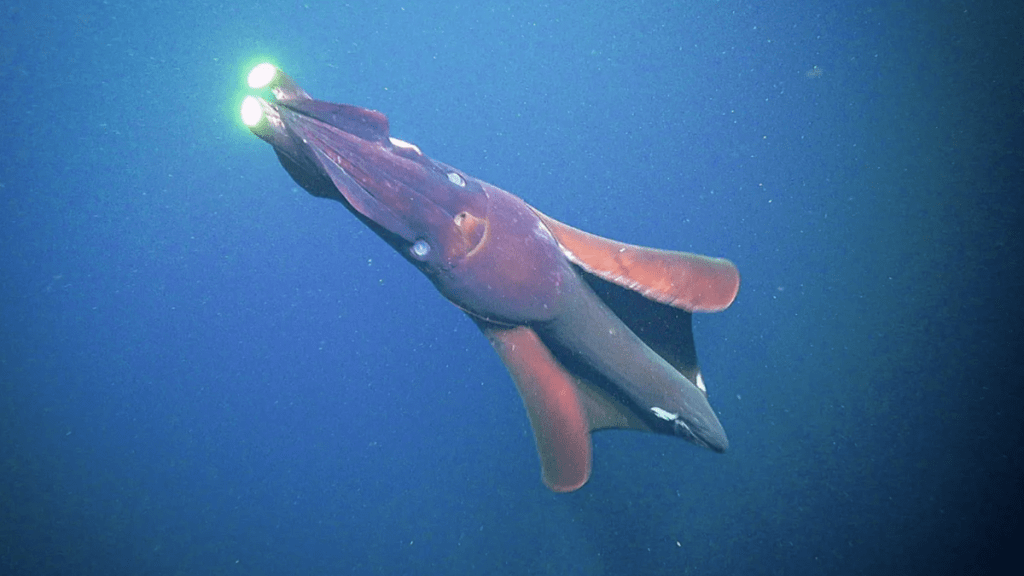
Scientists have discovered evidence of a giant squid in Western Australian waters after more than two decades. The rare finding came during a deep-sea research project near the Ningaloo coast. Researchers say the discovery highlights how much of the ocean still remains unexplored.
Giant squid spotted in Western Australia waters by scientists
Researchers uncovered traces of the giant squid while studying underwater canyons in the East Indian Ocean. According to People, the area is about 750 miles from Perth. The team used environmental DNA, or eDNA, to detect species living deep below the surface.
Scientists collected 178 water samples from five different depths. Some samples came from areas as deep as 4,540 meters. They also used remotely operated vehicles and specimen collection during the survey.
Dr. Georgia Nester led the 2026 study published in “Environmental DNA”. She said the giant squid discovery captured public attention for a reason.
“Finding evidence of a giant squid really captures people’s imagination,” she explained in a report published by WAtoday on May 6.
The study identified evidence of 226 species from 126 families. Researchers also recorded 83 new species records or range extensions. The findings included the sleeper shark and the faceless cusk eel, which scientists detected in Western Australia for the first time.
The giant squid stood out because researchers had not recorded the species in the region for over 25 years. Dr. Lisa Kirkendale from the WA Museum called the finding especially important. As reported by New York Times, she said it marked the first detection of a giant squid in the area using eDNA technology.
According to the Smithsonian Ocean, giant squids can grow up to 43 feet long. Their eyes can be as large as large pizzas. Despite their enormous size, scientists rarely spot them because they live deep in the ocean’s twilight zone.
Researchers first filmed a live giant squid in its natural habitat in 2012. Before that, most sightings involved dead or dying specimens.
Scientists believe many more unknown deep-sea species still wait to be discovered.