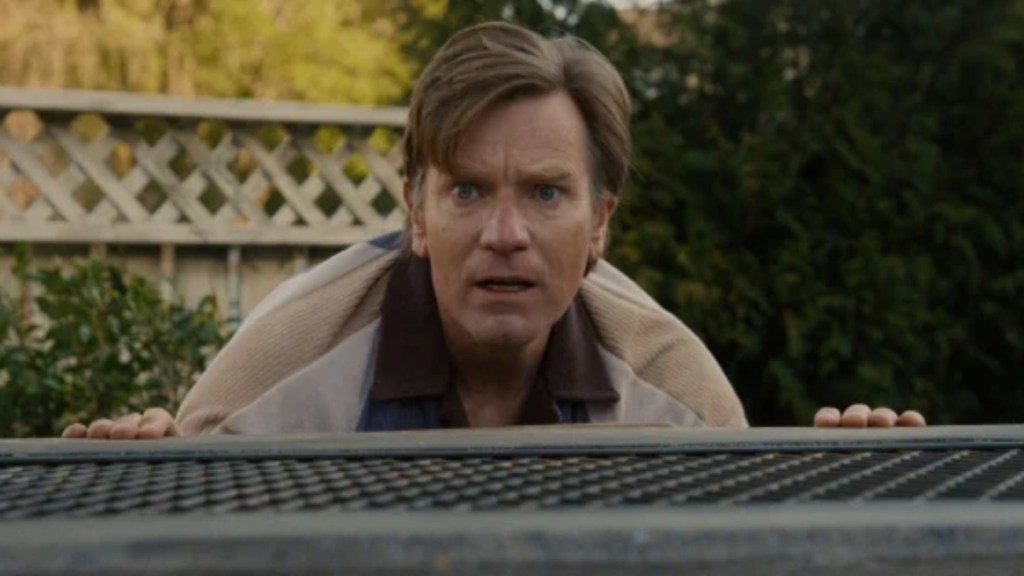
Ewan McGregor just revealed The End of Oak Street almost ended on a far grimmer note for the Platt family. The star discussed the film’s original darker conclusion and why the creative team ultimately changed it.

The End of Oak Street’s darker original ending revealed
Ewan McGregor has revealed that The End of Oak Street originally had a much darker ending. In an interview with USA Today, the actor discussed the alternate conclusion for the sci-fi thriller. The film, written and directed by David Robert Mitchell, stars McGregor alongside Anne Hathaway, Maisy Stella and Christian Convery.
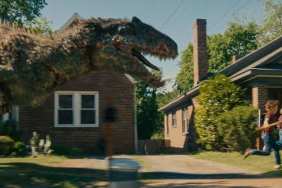
The End of Oak Street follows the Platt family after a mysterious event transports their 1982 Michigan neighborhood to prehistoric times. Greg (McGregor) dies protecting his family from a dinosaur during the ordeal. The theatrical cut then allows the surviving family members to travel back through a wormhole and save him.
However, the original ending took a very different path for the Platt family. In that version, Denise and the children traveled too far back through the wormhole. They ended up stranded with early settlers instead of returning to their own era. As a result, the family never saved Greg at all.
McGregor compared his death scene to Samuel L. Jackson’s surprise shark attack in Deep Blue Sea. “You just don’t expect it and the director chooses a moment where you really catch the audience off guard,” he said. He also called it “a funny moment, I think. And then quite gnarly.”
The creative team ultimately chose the more hopeful ending to give the story a definitive conclusion. McGregor admitted the time travel mechanics got confusing, saying he tried “not to bother about it too much and said the lines.” He added that he was “happy to be there at the end of the film.” Despite the happier theatrical ending, the film still carries complicated implications about alternate timelines.
Originally reported by Vritti Johar on Comingsoon.net.