President Donald Trump said on Monday the U.S. Navy had made progress on the Strait of Hormuz and now holds “100%” control of the waterway. This comes amidst a new dispute over war reparations threatening to push Washington and Tehran further apart.
Donald Trump is seeking compensation from Tehran after Iran made its own reparations demand
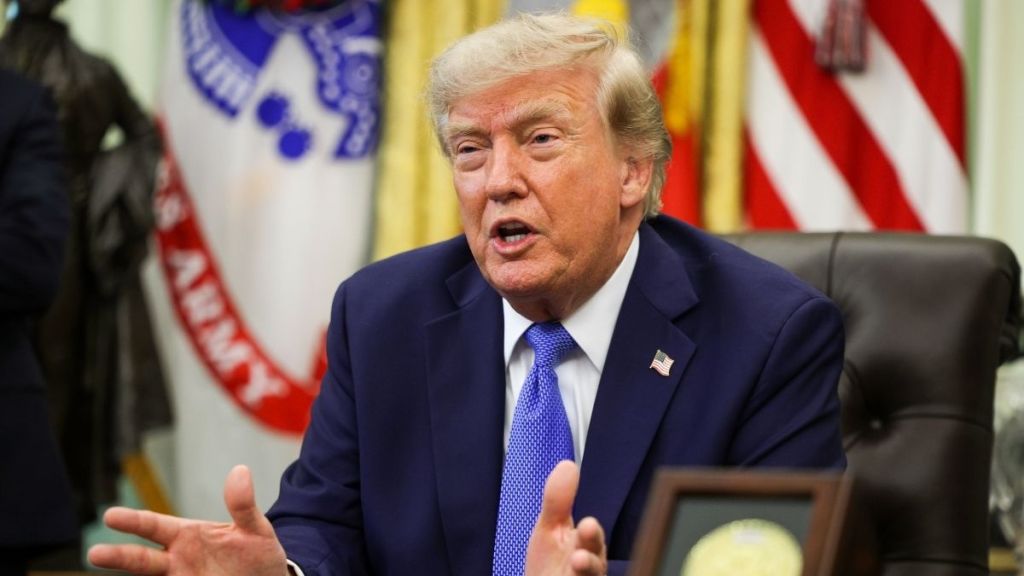
Trump told reporters in the Oval Office on Monday that the U.S. Navy had cleared the Strait of Hormuz of mines and now controls the waterway completely. “It’s open now,” he said, adding that the U.S. was “the only one that has control of the Strait of Hormuz right now.”
He called the American naval presence a “steel wall” and downplayed occasional Iranian mine-laying attempts. “They will, on occasion, drop a mine, and we find the mine,” he said. Washington has kept a naval blockade on Iranian ports since mid-April.
Tehran, however, reportedly disputes this. Iranian officials say the strait will remain shut until the U.S. lifts the blockade, and they have ruled out letting shipping talks with Oman fully reopen the waterway.
Now, Trump escalated the standoff on Tuesday with a Truth Social post that flipped Iran’s reparations demand back on Tehran. He said Iran’s request for war-damage payments gave him “an interesting idea” that Iran should pay the U.S. instead for Americans killed or wounded in roadside bombings and other Iran-linked attacks, and for Iranian protesters he said the regime has killed over the past 50 years.
The exchange of compensation claims creates a new obstacle to any potential deal. Before the Iran war, roughly a fifth of the world’s oil passed through the Strait of Hormuz. Trump has signalled he prefers to let economic pressure grind down Iran rather than launch further military strikes.
On the economic front, Iran’s foreign ministry spokesman Esmaeil Baqaei pushed back against remarks by US Treasury Secretary Scott Bessent, who had claimed sanctions were “suffocating” Iran. Baqaei described Washington’s sanctions habit as a “compulsive addiction” rather than a coherent policy, arguing that the US escalates economic warfare precisely when diplomacy stalls.