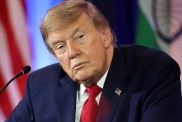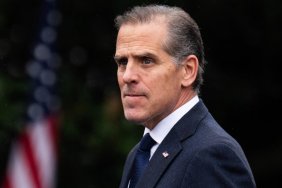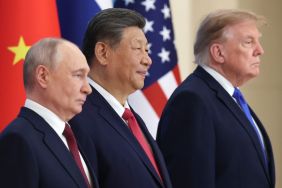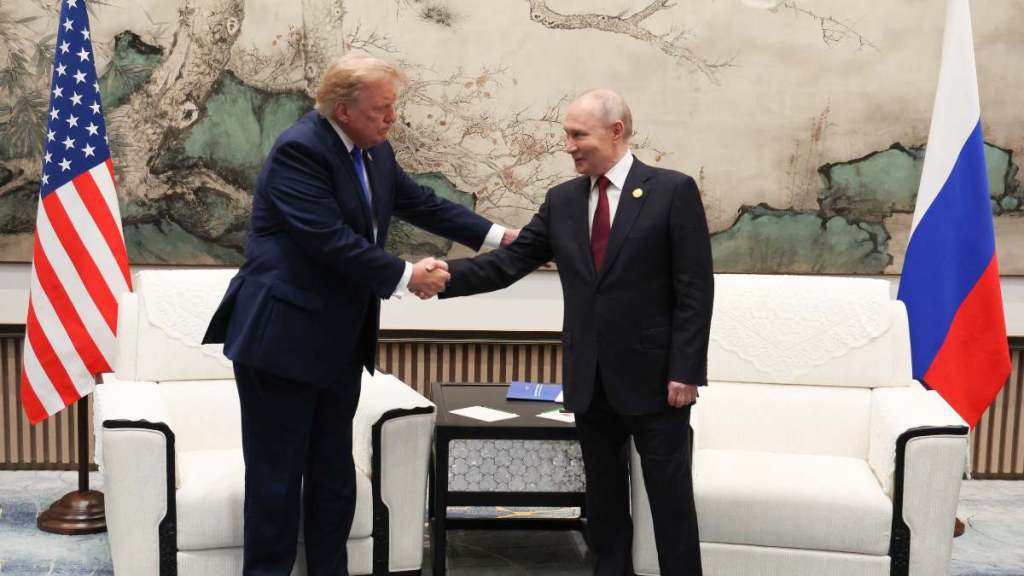
Donald Trump extended an olive branch to Vladimir Putin during a high-profile diplomatic meeting. The U.S. president took aim at the international court pursuing the Russian leader over alleged war crimes. This comes amid Trump receiving backlash for referring to Putin as his “friend.”
Donald Trump’s ICC remarks during the trilateral summit in Shenzhen
The International Criminal Court’s 2023 warrant against Vladimir Putin stems from alleged war crimes during Russia’s invasion of Ukraine. Prosecutors accused the Russian president of responsibility for the unlawful transfer of Ukrainian children to Russia. The court also issued a warrant against Maria Lvova-Belova, Russia’s commissioner for children’s rights. Moscow rejected the allegations and called the warrants “outrageous (via The Daily Beast).”
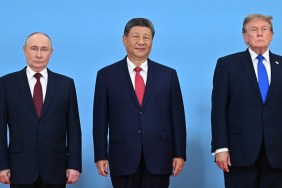
Against that backdrop, Trump raised the ICC during Thursday’s trilateral discussions with Putin and Chinese President Xi Jinping in Shenzhen. He proposed cooperation to shield national sovereignty from organizations he described as “rogue and globalist.” Trump also accused the court of exceeding its authority and said it had “gotten out of control.”
The meeting produced a four-point agreement that included language on international legal institutions. The document emphasized state consent and protections for government officials, while saying the ICC and similar organizations “must not abuse their jurisdiction.”
Putin had already met Trump privately on the sidelines of the summit, a few hours before the three leaders’ public discussion. During the gathering, the Russian president spoke about preserving international law alongside China and the United States. However, neither Washington nor Moscow recognizes the ICC’s authority.
The ICC moved against Putin over alleged deportations tied to Russia’s invasion of Ukraine, launched on Feb. 24, 2022. Judges said evidence gave them reason to believe the Russian leader had personally played a role and had not stopped the alleged transfers. But the warrant has no easy path to enforcement. The court lacks its own police force, while Moscow rejects its authority, leaving Putin beyond its reach so far.
The United States has also taken action against the court. Republicans have opposed its authority for years, including through the 2002 Hague Invasion Act.