On the last episode of The B-Movies Podcast (on its 78th episode for those keeping score, which I am), William “Bibbs” Bibbiani and I reviewed the kinda funny, kinda okay, pretty mediocre R-rated sci-fi comedy film The Watch. We were both merely warm on the film. It’s one of those movies where you’re reduced to vague adjectives that express more apathy than description. Too many films in this world can be described as, “It was okay, I guess.” But with The Watch, that’s where we are. It was okay, I guess.
We were also both a mite baffled by a specific action committed by the characters in the film; whenever they encountered a mysterious viscous green ooze, their first instinct was to shove their fingertips in it. And while I would think to touch a mysterious substance I was investigating, I like to think I would at the very least be careful enough to poke it with a stick before I go putting my uncovered fingers into it. The characters in The Watch not only dip their fingers into alien green slime, but they roll it about on their hands, massaging it into their skin, and commenting that it felt like a particular human fluid. This was, of course, played for laughs, but it bugged both Bibbs and I that no sane human being would likely do this.
Of course, oddball behavior is par for the course in movies, especially given how many fantasy films there are in the world. I wouldn’t call dressing like a bat and punching muggers to be a particularly natural course of action for the average American, but I accept it when I see it in a Batman movie. But there are plenty of little strange foibles that only occur in movies that still bug the heck out of me. I’m not talking about plot problems, or little cinematic tricks (binoculars, for instance, never look like two circles to the real human eye, but we accept the “double circle” look as cinematic shorthand), but actions of the characters that seem to defy all normal and recognizable social traditions all in service of the plot.
Here’s a list. Follow along.
The Refusal to Explain Anything in Romantic Comedies

Doubtless you have recognized this one. Many romantic comedy plots, even the ones stretching back to Ernst Lubitsch’s frothing celebrations from the 1930s, are predicated on subterfuge. One character, usually the man, will have to pretend to be someone else, or perhaps to have a different job, etc., in order to lure their unsuspecting female victim into a false sense of security, so that they may steal some money, or get some favor out of them. Along the way, of course, the con man will end up falling in love with the unsuspecting female, usually beguiled by her feckless innocence and strength of character. When the man finds himself falling for the girl, though, he never, never seems to do the sane thing, and drop the façade immediately, admitting his love. Eventually, the truth has to come out at the most inconvenient moment so that the two lovers can drift apart, only to be reunited by some last-ditch romantic revelation.
For one, it always bothers me that the con man never thinks to ask the society dame for a favor outright. Secondly, I bugs me that the male never thinks to reveal his “plot” to the woman he loves, insisting that he keep the lie alive. And thirdly, the woman, when she does eventually hear of the scheme, always responds with sourness and outrage. I suppose if the man did the usual thing, and reveal his feelings for the woman at a legitimately romantic moment, and abandon his scheme, the movie would end. And even if he did admit to his scheme, why is it the woman never thinks to say something like “Well, I’m upset that you were plotting against me, but I can tell you love me, so let’s forget all this mess and go boink in the other room?” Forget your schemes, pal. Just go for the girl. It doesn’t have to be that complicated.
The Sex Comedy Lack of “I Can Explain!”
Think of the American Pie movies in this regard. Those films, and many others of its ilk, are based on mortifying moments of sexual embarrassment, as teenage boys (or twentysomething or thirtysomething men who behave like teenage boys) find themselves embroiled in some sort of arch sexual scandal that ends up being made public at the worst possible moment. Semen in the hair, pubic hair on the wedding cake, being locked outside in the nude or wearing ladies’ underwear. The film goes well out of its way to put their lead (often male) characters into horrible embarrassing moments wherein their sexuality is put on full display. The character in question, naked in a spotlight, has to sputter and giggle, and often has to come up with some sort of lame excuse as to how they got that way.
Just once, I’d like to see this situation handled with real-life dignity. Standing in the nude, I would love to see someone stand up straight, cover themselves with dignity, and calmly explain to the nuns that this was unexpected, that you are embarrassed by this, and that a brief explanation would diffuse the situation. Talk to the cop, and ask for help back to your hotel, and if they’d help wash the chocolate sauce off of your body. If you get stuck in front of your in-laws-to-be in full drag with a blow-up doll in one hand, and an operational vibrator on the other, take it like a man.
Talking Villains
I’m not the first to notice this, and it’s very ubiquitous, but it still bothers me. I’ll be brief, as reams have already been written about this one. You know how in a good-guy-vs-bad guy movie of any stripe, say a spy movie, that there will always be a moment where the bad guy has the drop on the good guy? And how the good guy will be separated from his weapon, while the bad guy will still have his? And the bad guy will have his gun to the good guy’s temple, ready to kill him? AND HOW HE WON’T ACTUALLY KILL HIM FOR SOME REASON? And how the bad guy will take that moment – a moment that would be perfect for completing his task of murdering the good guy, a task he’s spent the whole movie trying to do – to tell the hero about his evil plans to take over the world, or, at the very least, to tease the good guy a little bit before he pulls the trigger?
Seriously, Mr. Villain. You’ve spent the bulk of the film having your evils plots being interrupted by this guy. Just shoot him! Again, this is a common complaint. But I have it.
The Lack of Kneecapping
Another one from action movies. Often when an innocent character gets a hold of a gun, and points it at a bad guy, the bad guy will taunt them by explaining they are too weak to actually fire the gun and murder the guy. And, yes, often that character is not violent enough to actually shoot someone in the face. But the gun-haver is not necessarily looking to kill the bad guy, but merely stop him from continuing on with his plot. Why, then, does the good guy never think to shoot the bad guy in the knees?
Seriously. This seems like such a logical course of action to me, that I’m surprised I’ve seen it in so few films. Guns do necessarily mean instant death. All they do is make a hole in a human body from a distance. If you shoot a guy in the kneecap, he’ll fall over, and he’ll be useless to continue his evil task. Batman notoriously refuses to kill people, but he could have easily stopped The Joker if he merely bent his legs backwards. He doesn’t have to kill people. He can just grievously injure them. Seriously. Shoot a guy in the knees. Crush his hands. Cut off his feet. Slip him a special drug that blinds him for 48 hours at a time. You don’t have to kill them to stop them. Just remove them from the equation. I’m sure Batman has a special tool that can cut off a guy’s feet. He should use that more often. Mutilation is still gross and brutal, but I would argue it’s preferable all around to murder.
Exposition in General
A general note: Exposition is often awkward. You know what I’m talking about. When a movie character has to explain their own backstory (or another character’s backstory) to the audience. There is an art to this sort of explanation. When done well, the audience receives the information without really noticing. When done poorly, the dialogue feels oh so forced. It becomes clear that human beings don’t talk that way. When you know about a friend’s wounded past, you’re usually very tactful when you bring it up, if you bring it up at all. Usually a haunted past is understood and kept silent. It’s not openly discussed in dialogue.
Hundreds of screenwriting books have been penned on the subtlety of exposition. Read one of ‘em sometime. You’ll start noticing unnatural explaining dialogue everywhere.
From the Desk of William Bibbiani:
Unless they’ve made their movie spectacularly well, there’s always a little disconnect between the characters on screen and the audience. If you’ve ever yelled at the movie because the nubile teenager in a slasher film ran upstairs instead of out the door, you’ve experienced this phenomenon. The character is in a panic, faced with possibly the first life-or-death situation of their life, and struggling to balance their “fight or flight” impulse with the logic centers of their brain. The audience is sitting comfortably, hopefully engaged but almost always more objective than the characters on screen. It’s a little unfair to judge the poor bastards fighting off the masked killer of the week, but judge we do. If the behaviour of the characters doesn’t make sense to us, it’s both distracting and off-putting. Sometimes it’s even annoying as hell.
So while I’m sympathetic to the plight of our own screen protagonists (and villains), it’s time to once again reassess what is and is not plausible on-screen behaviour. Witney brought it up first, but I’m the one who mentioned it in my review: the characters in The Watch repeatedly stick their fingers in a mysterious, green bodily excretion just because it’s there. Presumably they wash their hands at some point afterwards, but nobody makes a point of it. Germs are a thing, filmmakers. I’m more OCD than many, I realize, yet I cannot fathom too many halfway rational audiences members doing the same thing when they encounter a disturbing alien slime.
If you watch enough movies, you’ve seen this phenomenon in dozens or even hundreds of different ways. Not so much clichés, necessarily, as ways that people interact which would only happen in a film. It’s time to put some of these to bed. At worst, it’s sloppy writing. At best… it’s also sloppy writing.
Lying to the Cops
It’s everyone’s worst nightmare: the bachelor party was going so well until the stripper got killed. It was an accident, but it looks bad. There’s a 1:5 scale model of the Paramount logo made entirely of uncut cocaine on the coffee table, and one glance makes it look like the result of foul play. There’s only one thing to do…
Call the cops, you idiots.
If you’ve never seen a movie before (or have somehow only seen Crimes & Misdemeanors), you might think it’s a good idea to roll the lady up in a rug and keep the horrible night a secret for the rest of your lives. But unless it’s a period piece, the odds are good that the characters have seen a movie, and know that hiding the body and/or lying to the cops about an accidental death will lead to paranoia, betrayal and, inevitably, a series of intentional deaths of your friends and loved ones. Even if you don’t wind up being the fall guy, the life you wanted to protect in the first place is effectively over the second you say, “Oh, let’s not.”
Call the cops and tell them exactly what happened. They will appreciate your honesty, and while you may still get in trouble it will be a fraction of the hell your life would become otherwise. Sheesh.
Not Lying to the Cops
There is, however, one big exception to the previous rule, and that’s when you’re in a horror, sci-fi or fantasy movie. If someone accidentally falls on a coat hanger and died, you should call the cops. If someone gets eaten by a leprechaun, you should still call the cops but you should also probably leave out the whole “leprechaun” part. The goal isn’t to prove that there are really leprechauns, the goal is to get people with guns to your location immediately to shoot the killer, who just happens to be a leprechaun. You’ll still get credit for finding a real leprechaun, but you’ll actually live to gloat about it.
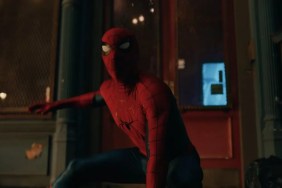
Case in point: The Amazing Spider-Man. Yes, I’m bitching about that again. Everyone claims that they like this new version of Peter Parker because he’s actually really smart, but then he goes to the cops to tell them that Dr. Curt Connors is a giant lizard man. And he actually expected it to work. Not smart at all. If he told them that Dr. Connors had gone off his meds and planned to release a deadly toxin into the air, and they would have at least taken him seriously long enough to track down Connors and discover for themselves that he’s a giant lizard. Bob’s your uncle, everyone’s happy, and afterwards you can still gloat about it by telling them all about your cunning ruse.
Filming Every Damned Thing
The found footage horror genre isn’t a fundamentally bad one, but it has a fatal flaw. No matter how much real people like to document their lives, most of them turn the camera off now and again. The odds of capturing every story element necessary to make a complete movie are pretty damned slim. Early examples of the genre, like The Blair Witch Project, had a good excuse: the protagonists were documentary filmmakers, and would be damned if they didn’t make the most of their crappy situation. Fair enough.
But since then, many found footage documentaries have had serious trouble justifying why any character would keep the camera constantly running while their lives are in danger, and their worlds are turned upside down by the sudden appearance of ghosts, monsters or leprechauns. (I have a thing for leprechauns.) There’s no justification for the conceit, and it always reduces the cameraperson to saying implausible lines of dialogue like, “I don’t know what else to do!” Well, the audience knows what else to do: drop the damned camera and act like a human f*cking being.
Trusting Incompetent Lackeys
There are few movie characters I hate more than Otis, Lex Luthor’s incompetent boob of a sidekick in the first two Superman movies. It tells you everything you need to know about that particular version of Lex Luthor: he sucks. He’s supposed to be some kind of criminal mastermind and he can’t even hire halfway decent help.
I get why a criminal mastermind would want to have a doofus around. They’re too stupid to betray you, faithful enough to follow orders blindly and act as a constant reminder of your own greatness. I dunno, maybe Luthor went to high school with the guy or something. But at some point, you really do need somebody with a college diploma, or at least a lick of common sense. If I send my henchmen out for a chicken sandwich with no tomato, there had better not be any goddamned tomatoes on it. Why would Lex Luthor and Voldemort settle for less?
Never Saying “Goodbye” on the Phone
Is this just me? This is considered rude, right? When you’re talking to another human being on the phone, just hanging up on them isn’t considered very polite at all. There are certain social courtesies that we all agree to follow. We say “Hello” to someone, we inquire about the overall quality of their day, or as to the events that passed since the last time we spoke. When a conversation is finished, we say “Goodbye,” or “Bye-Bye,” or even just “Laterz” to indicate that we have to go. I don’t care if terrorists are on the loose, the fact that Chloe never called Jack Bauer out on this crap always drove me up the wall. (Yes, that’s a TV series, but it’s most consistent example I can think of.)
What do we even gain from this little piece of behavior? All it tells us about the character is that they’re too busy to be polite, or too self-absorbed to care. Screw you, douchebags.
And laterz!