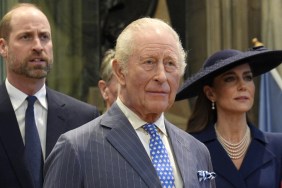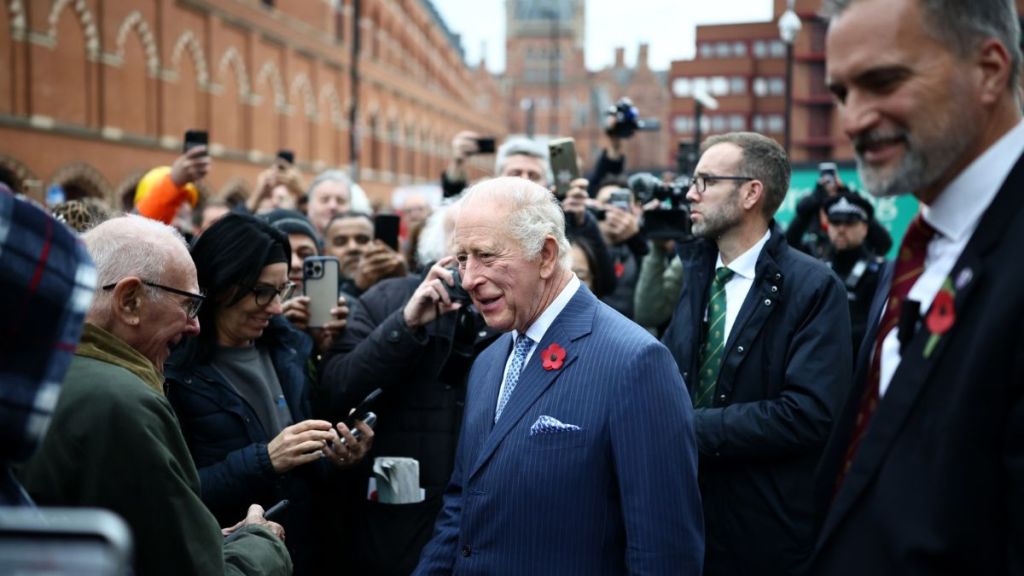
London‘s boisterous crowd left King Charles unable to hide his delight as joyful cheers echoed all around him. The news follows his tour of the Francis Crick Institute, Europe’s biggest biomedical research center. The halls came alive the moment he arrived, ready to reveal the facility’s latest breakthroughs.
King Charles’ reaction to noisy crowd during London visit goes viral
London turned up the volume for King Charles on Wednesday, November 11, and he mirrored the crowd’s energy right back.
The Francis Crick Institute in King’s Cross buzzed with excitement as hundreds of researchers stopped working. They leaned over the glass balconies, cheering for His Majesty as he explored the groundbreaking science on display.
It was among his recent engagements following his Caribbean tour with Queen Camilla. The appearance, marking the biomedical research institute’s 10th anniversary, came shortly after he led the Remembrance tributes at the Cenotaph.
According to the Daily Express, lipreader Nicola Hickling has deciphered the King’s priceless response to the roaring welcome. As observed by Hickling, the 77-year-old remarked, “Hello! What a mighty roar from your fellows this morning.”
Next, Charles greeted a woman in a cream jacket, who bowed politely as he approached. Delighted by all the excitement, he joked that he needed to try what they’d had for breakfast. He said, “You have the noisiest crowd. I want what they had for breakfast.”
During the tour, the monarch viewed lung tissue slides in a lab as Professor Charles Swanton and Professor Sonia Gandhi explained their latest research partnership. He was also given a photograph of the late Queen Elizabeth at the institute’s opening 10 years ago.
Per the outlet, Charles then watched a presentation highlighting the full scope of discovery science at the institute. It covered early human tissue development and how rising temperatures may impact the immune system and health.
The visit also included a look at a new model of a human amniotic sac grown from stem cells by scientists there. They built the model while researching regeneration and how humans grow from an embryo in early life.